Fees and Legalities: The Issues with Austria’s Electricity Price Stability and How to Address Them
How Austria is financially incentivizing or disincentivizing renewable energy development and what to do about it.
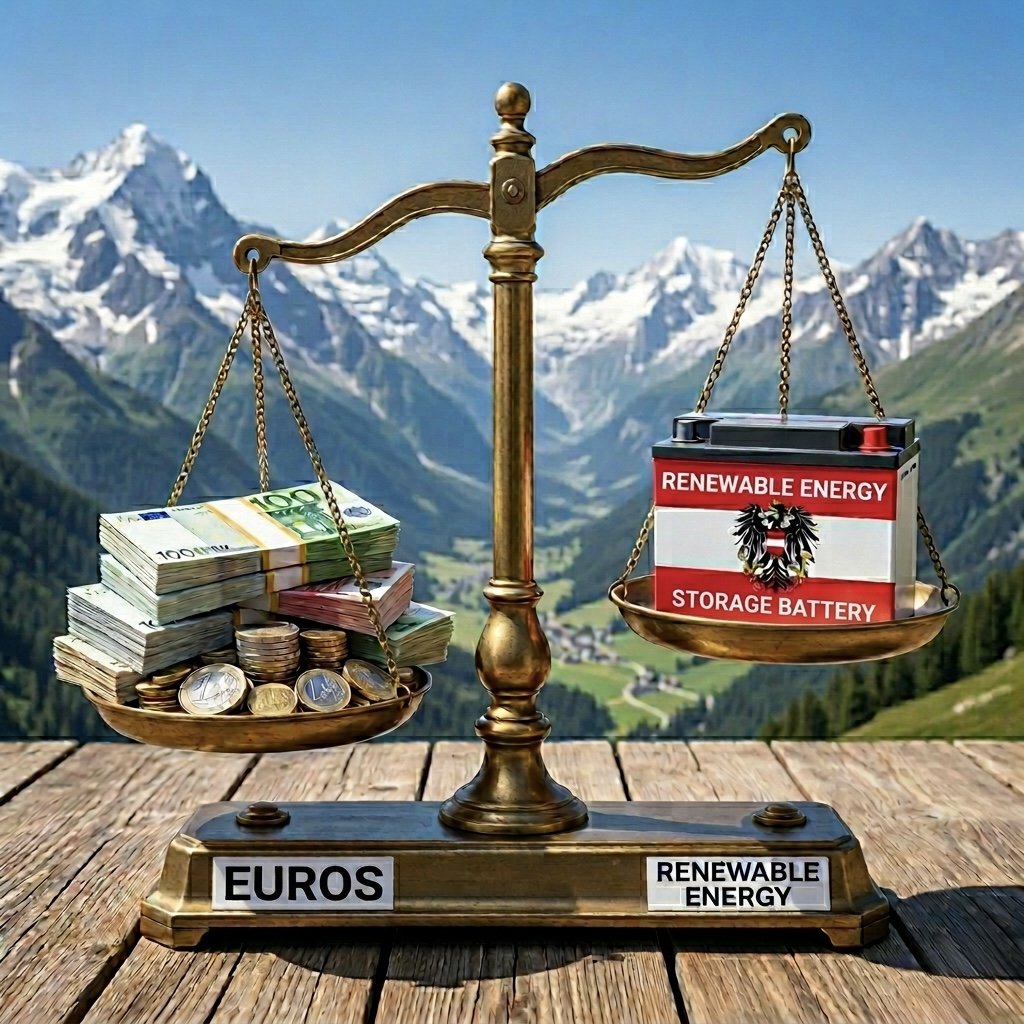
Austria has a goal of fully using renewable energy by 2030. Technologically, the country has a long way to go, especially in implementing grid-scale battery storage. Even assuming the technological issue is solved, the feasibility of battery storage faces another hurdle: the legal structure of electricity and grid fees in the country.
Electricity generators make money based on the electricity they produce. Simple enough, but, because supply must match demand at all times, how much they produce constantly changes.
As expected, the cheapest sources deploy first before more expensive ones come online. Renewables such as solar and wind have low marginal operating costs as their fuel cost is close to nonexistent, so they come online before expensive options such as natural gas plants and other fossil fuel generation, all in order of marginal cost.
In theory, this model would mean that when demand is low, the low prices would flow toward renewable generators and when demand is high, fossil fuel generators will make the most money. To equalize renewable electricity generation, however, Austria uses the “merit order curve” when determining how much to pay generation facilities. The merit order curve holds that all generators receive the fee per kilowatt hour of the highest marginal cost generator at a given moment. For example, if a solar farm is producing electricity already, and due to increased demand a coal plant begins generating electricity, both generators will receive the marginal costs associated with bringing the coal plant online and its higher generation costs. In this way, the merit order curve incentivizes renewables by not penalizing them for being cheaper to operate than fossil fuel facilities. This update to Austria’s legal structure has been key in the country’s renewable development initiatives.
However, while marginal cost economics have partly been addressed by merit order pricing, negative pricing presents a noticeable barrier to renewable development. When electricity demand falls below active supply, that electricity has to go somewhere, so generators pay consumers to use electricity and remove it from the grid. Negative prices occur often during periods of peak renewable generation such as sunny and windy days. Because of its correlation with increased renewable generation, negative pricing disincentivizes renewable developers from building and operating new facilities as they would have repeated instances when they would have to pay out during times of increased production (even with merit order pay) during times of high prices.
Grid-scale batteries bring down both overall prices and instances of negative pricing. When prices would otherwise become negative, batteries can create demand by charging and absorbing the excess generation, thereby reducing negative pricing severity. When prices are otherwise high, batteries and their low marginal operating cost - “operating” is a strong word here because really, they would be discharging - will mean they become the first types of electricity used under the merit order effect before other sources, especially high marginal cost fossil fuel generation. By allowing for renewable dispatchability and reducing the financial burdens on renewable generators, grid-scale batteries will play a key role in allowing for Austria’s green transition.
The legal structure, and tariffs surrounding batteries, however, play a huge role in whether grid-scale batteries are a profitable investment for developers. Austrian law currently “double charges” energy stored in grid scale batteries, meaning that electricity is taxed both when it is produced and again when batteries discharge it back into the grid. Energy produced by fossil fuel plants brought online during high demand periods do not have this double charge, so fossil fuel electricity is in this way given a competitive advantage. While some countries such as Germany have eliminated this issue, Austria has not. These extra fees come at the expense of battery energy producers, making their projects less profitable and therefore disincentivizing their creation in the first place.
Grid-scale batteries would provide Austria with stability on two fronts. First, they would stabilize the overall supply of electricity to match demand as batteries can discharge when supply is less than demand and charge when electricity is oversupplied (more on this here). Second, grid-scale batteries would stabilize electricity prices by providing low marginal cost electricity when demand is high and counteract negative prices when demand is low. As negative prices hurt renewable prospects, this stabilization would not only allow for physical Infrastructure compatibility but also financial assurances for renewable developers. For these reasons, eliminating double charges on battery energy would incentivize more renewable development and stability of the electricity grid.
To reach its goal of full renewable energy by 2030, Austria needs grid-scale batteries. Merit order pricing allows renewable generators to compete equally with fossil fuel generators during times of high demand. But elimination of double charging would allow for grid-scale battery profitability, allowing for renewable competition when demand is close to or exceeds supply.
This is the kind of policy which would eliminate barriers to entry for battery storage and ensure the stability of the Austrian electricity grid and the country overall.
Read more from this author here