Lessons in Synchronization: The Story of Japan’s Two Electricity Grids
What Japan’s dueling electricity grids can teach us about energy security in times of stability and in crisis.
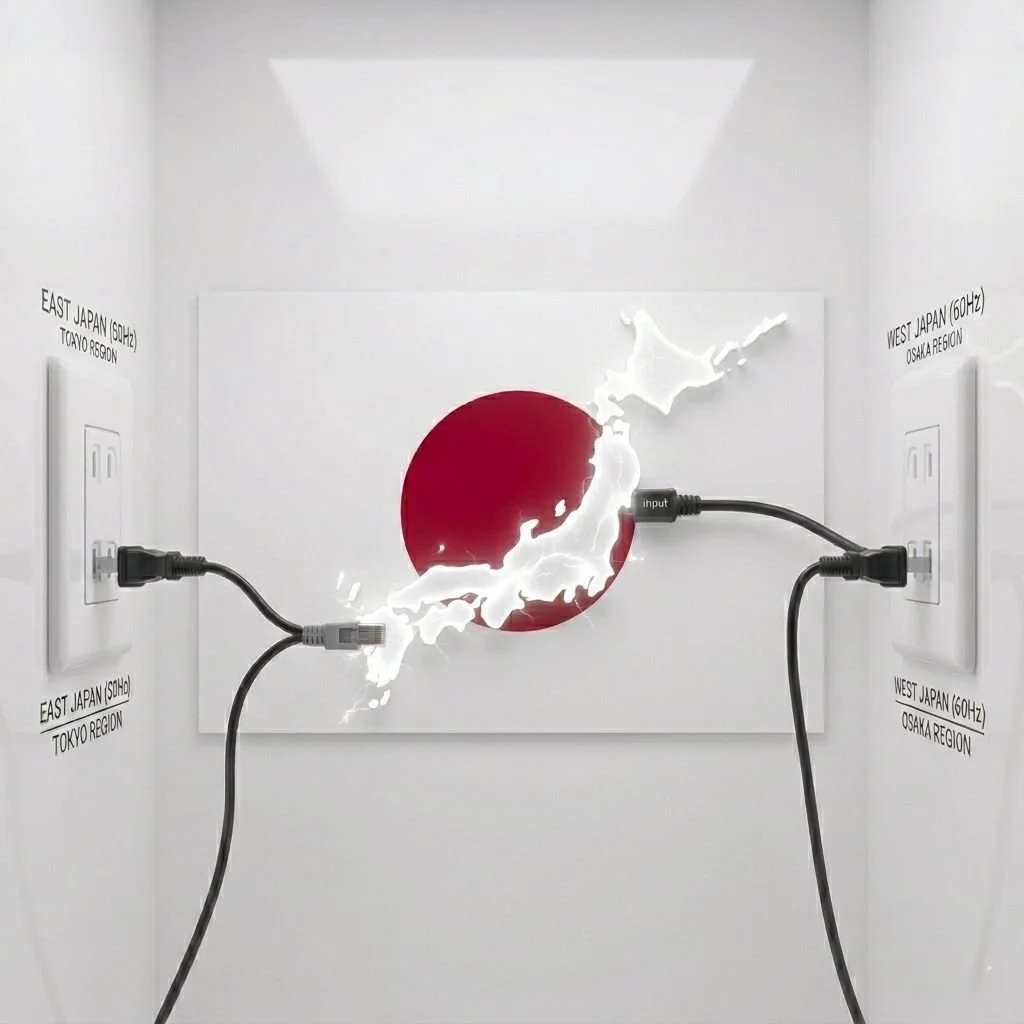
Japan, specifically its largest island of Honshu, has a problem with its electricity grid. The problem is that it does not have just one electricity grid but in fact two. The northeastern half of the island has one grid that is separate from that of the southwestern portion of Honshu. While this situation is a historical anomaly, it demonstrates some key lessons for the rest of the world.
Starting with the historical context, Japan’s split electricity grids began due to differing component imports. During the initial electrification of Japan, developers in the east imported European parts while developers in the west imported American components, and they used these components respectively to build two separate electric grids. As these two grids began to grow from their respective starting points of Tokyo and Osaka, they expanded to cover the entire island of Honshu. There was, however, a major problem. The European parts used in Tokyo and the east operate at sixty Hertz (60 Hz), meaning the frequency alternation of electricity occurs sixty times per second, while the American parts used in Osaka and the west operate at fifty Hertz (50 Hz). Many countries, such as the United States, have more than one electrical grid covering their territory, but this difference in electrical frequency made integrating the two grids technologically impossible.
The knock on effects were swift. For most of the twentieth century and even into the twenty-first, household appliances such as clocks and toasters only worked in either the east or west, and they would function incorrectly or break when used in the other half of the country. Eventually, Japanese household appliances began to include converter chips, but in 2011, the issues of two separate grids again came to the forefront. These two grids cannot share electricity other than through limited connections via direct current substations. When disaster struck eastern Japan’s Fukushima nuclear facilities, eastern Japan suffered severe and damaging blackouts because electricity from the west could not adequately supply demand in the east where generation had been crippled. Having two electricity grids meant that eastern Japan, including its capital Tokyo, was left on its own as western electricity could not come to rescue it.
While this difference in grid frequencies comes from historically poor planning, it does offer some lessons in grid redundancy and integration. Most countries, for example Austria, have one grid, so power from one part of the country can flow toward another. Even in countries with multiple grids such as the United States, electricity can cross the boundary via interties. Standardization, therefore, is key. One central grid or even one central standard would have solved these issues, but this grid incompatibility led to continued problems for Japan over the decades.
The lessons for Europe and the rest of the world are clear. Finding one standard is key, especially in moments of crisis. Shortly after the start of the Russia-Ukraine war in 2022, Ukraine and Moldova synchronized their electricity grids with that of Europe. This synchronization was only possible because Ukraine and Moldova already used the same grid frequency standard, 50 Hz, as the European Union. Having a technologically compatible grid allowed Ukraine to couple with European power in a time of crisis. Much like issues of its economics and currency, the issues of Ukraine’s physical infrastructure were lessened because of its standardization and interoperable capabilities.
Japan’s dueling electricity grids and the severe outgrowths of that division offer a lens into the problems of poor planning and inept coordination which cause real damage to the people who live there and have to deal with the situation. The counter case of Ukraine’s grid being ready for a European tie-in shows that with the proper foresight, coordinated efforts can mitigate extreme and emergency situations. When considering integration of infrastructure, finances, and energy grids - both within their borders and with their neighbors and partners - countries and governments would do well to remember this lesson or risk being left with broken systems and a pile of broken toasters along the way.
Read more from this author here.